WAITING FOR LOVE
DEATH BECOMES YOU
Nicholas Coffill
1/23/20261 min read
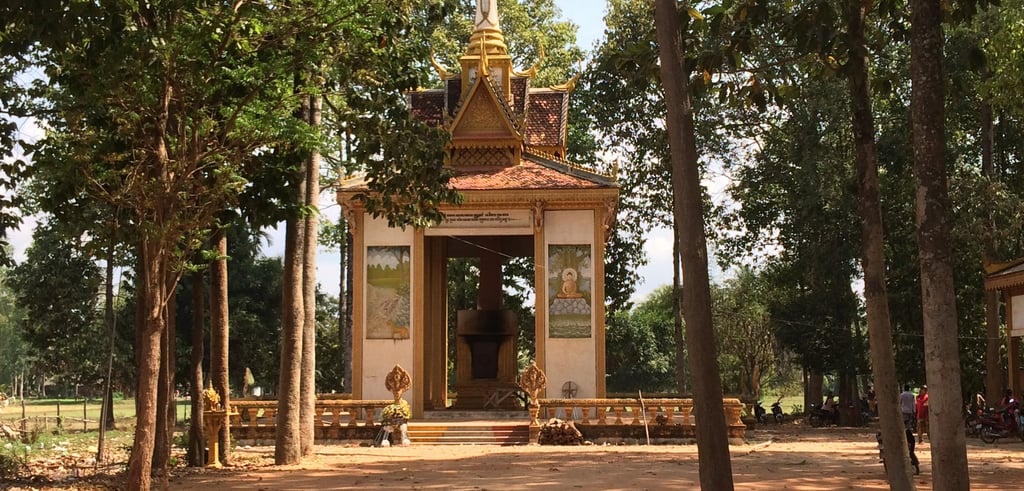
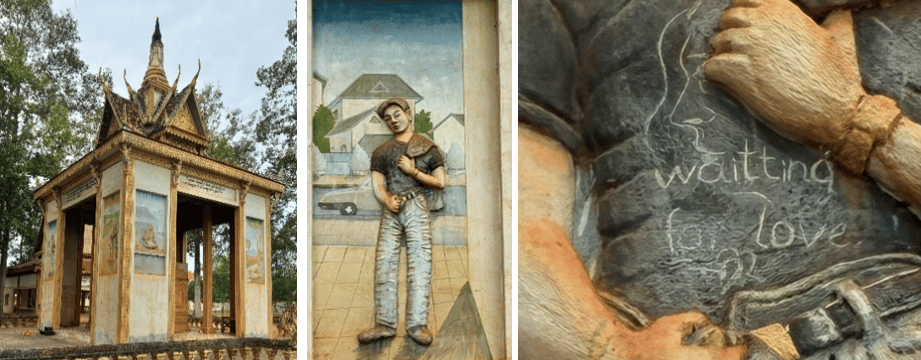
In 2004, the crematorium and nearby open prayer hall (sala chortien) at Wat Pren were rebuilt, above. On each face of the crematorium’s magnificent pavilion for burning the bodies were two frescos of Buddhist and vernacular imagery, left, some of them sculpted in low relief.
On the eastern side, see images below, one panel shows a young man of wealth—presumably the house and motorcar in the background belong to him, centre. His self-confident swagger is enhanced by his jeans, provocatively partially unbuttoned at the fly and with the belt hanging loose. He is wearing a black T-shirt with a brown jacket thrown over his shoulder. James Dean could be his idol. The profile of a woman with long hair is drawn on his T-shirt, with the words ‘waitting [sic] for love’, right. It seems such a self-absorbed and sexualised image to decorate a funerary edifice built for the wat’s community, yet it is all part of the moral story of life. We may think when we are young that we are the centre of the world with our sexual ego and cache of material wealth, but giving and caring for others brings merit, and when we die, our worldly assets are meaningless.
Intriguingly, scrawled in large chalk letters on the wall beneath the panel, and presumably written some years later, is the message ‘I miss you like crazy. I love you so much.’ The two messages may be unrelated socially, yet the themes of sorrow, loss, and ego serendipitously wrap the words together in partnership.
Like most crematoria in Siem Reap, this one at Wat Pren is set amongst a copse of tall native trees. Their leaves rustle in the breeze, providing a white noise that calms the suffering of beloved loss. As with the crematorium at Kok Balang, 1.6 kilometres to the west, this place was reserved for disposing of those who died during the COVID pandemic in 2021 and 2022.