VULTURES AND GIZZARDS
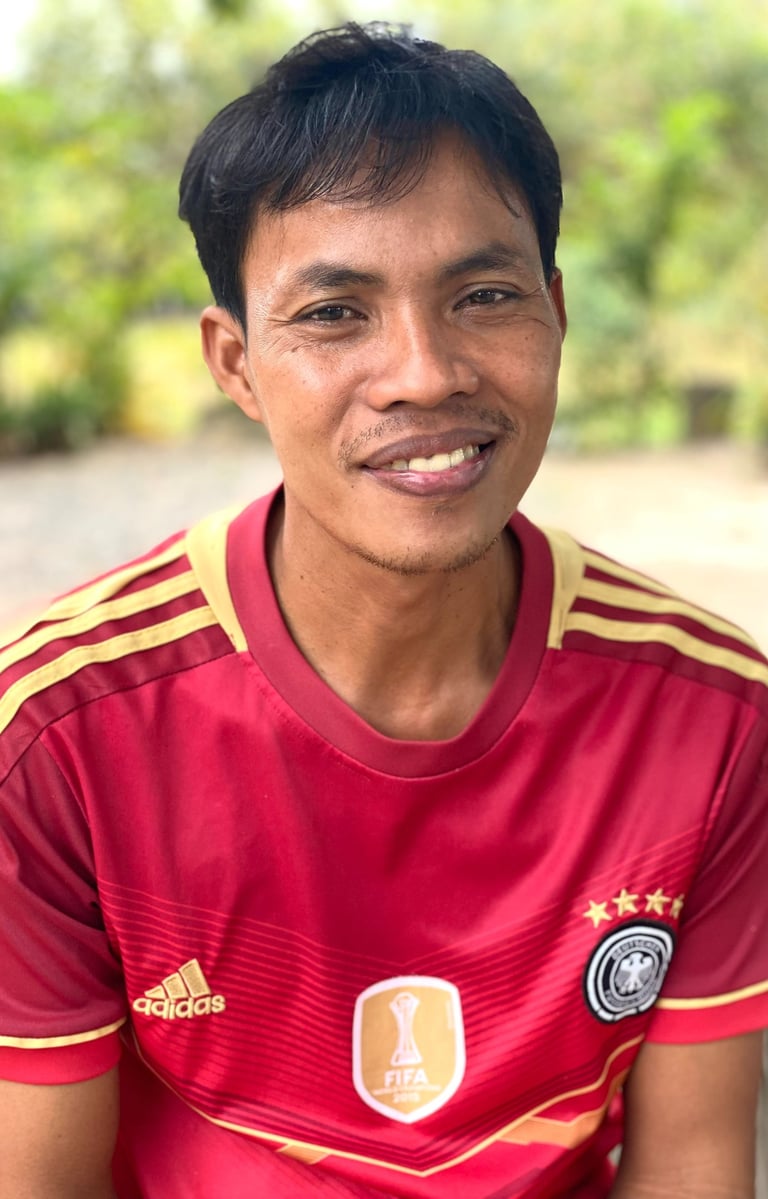
The creative works of .KUM Mororot
2/28/20261 min read
At Wat Preah Prom Rath in the centre of Siem Reap, turn left, and you will see in the garden a depiction of Prince Siddhartha leaving his palace on his chariot, and being jolted from his idle luxuries by the ‘Four Signs’: an old man, a sick person, a corpse being carried to cremation, and a monk in meditation. These observations led the prince to seek salvation, ultimately becoming a Buddha.
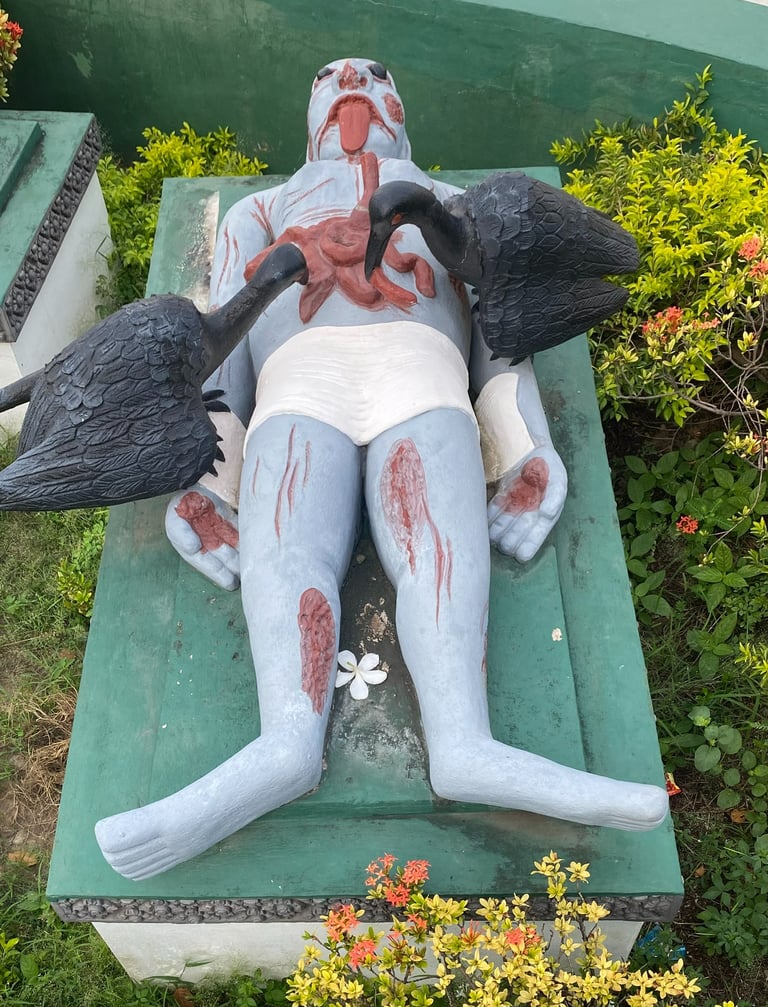
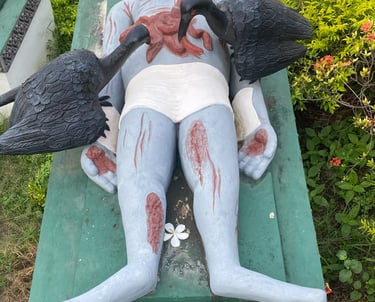
The wat commissioned sculptor KUM Mororot from Preah Dak Village to recreate the event for visitors. Perhaps Mororot’s imagination was a tad vivid, as he imagined the body not being taken to a cremation but being left to rot and be devoured by vultures, a traditional Hindu burial practice. He created two black vultures ripping and tearing out the entrails of the prone cadaver with its tongue lolling out and its eyes bulging. While his bloodless pale blue skin is smeared with wounds, by natural luck a fallen frangipani repeats the metaphor that life will pass.
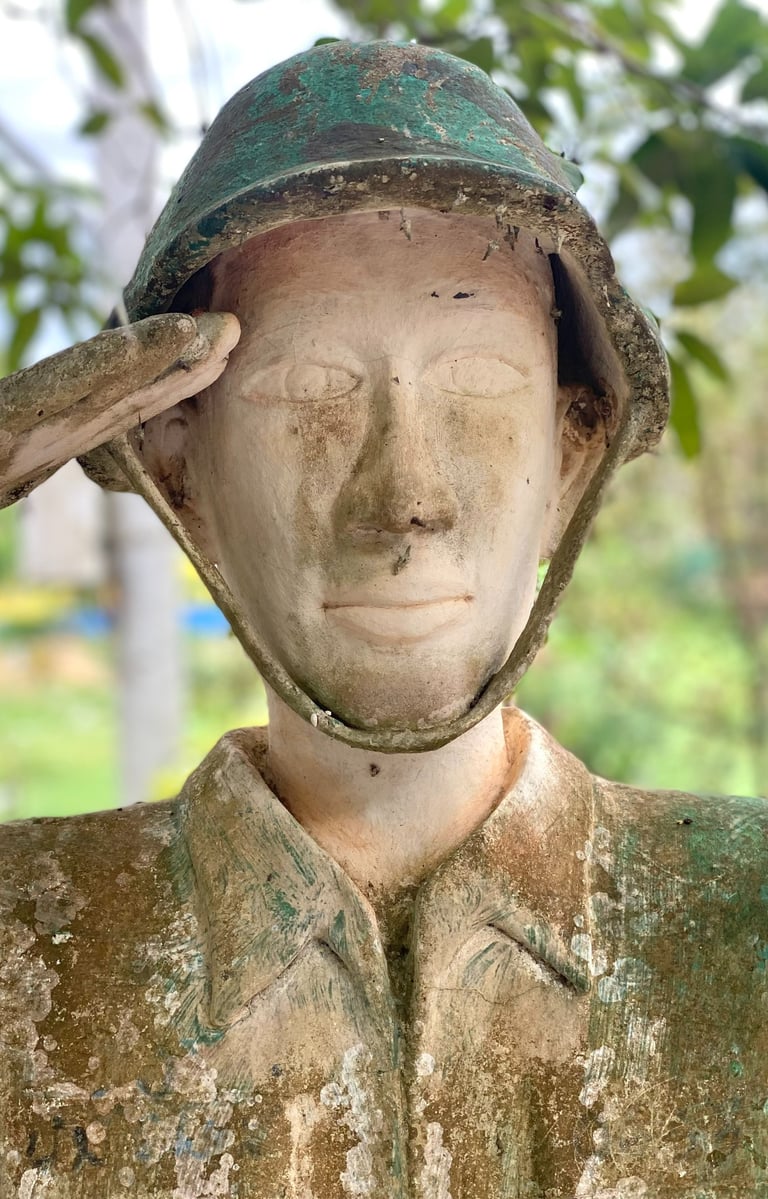
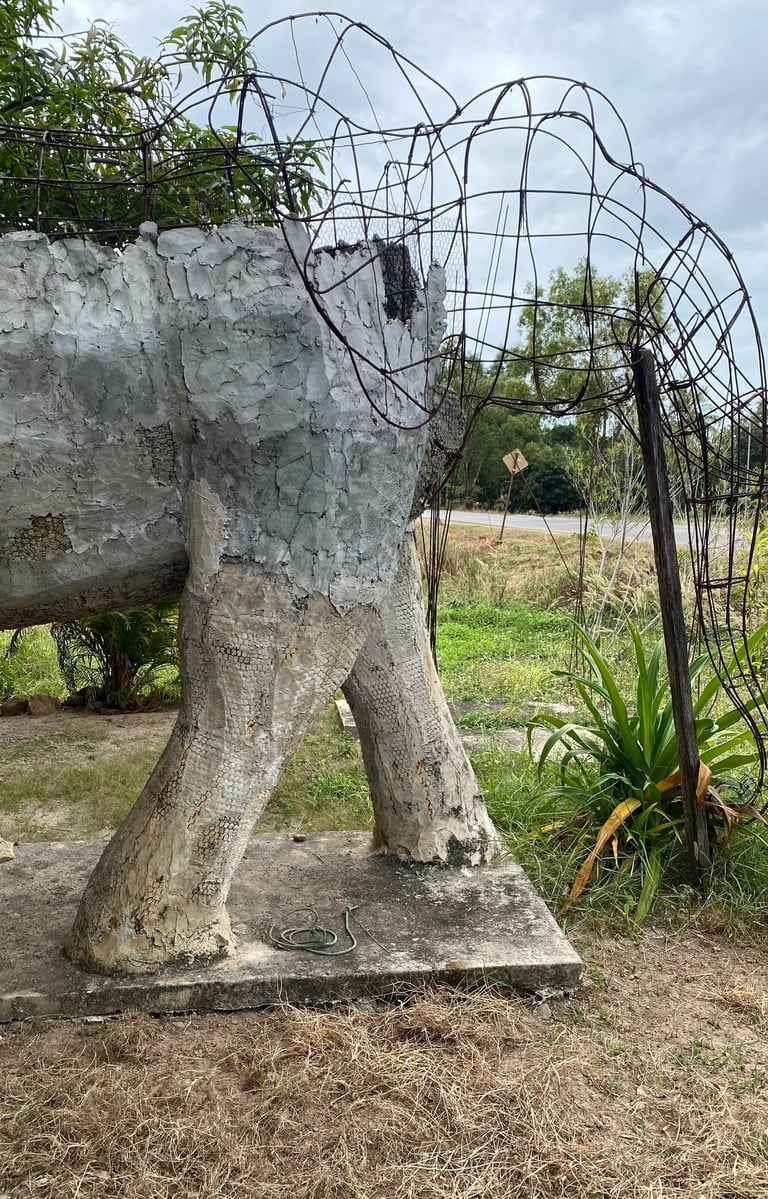
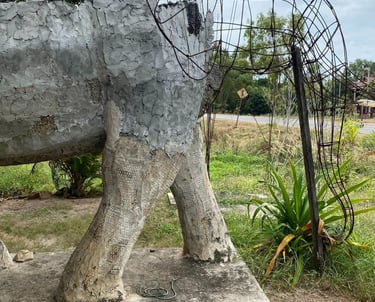
Mororot has an 'open plan' workshop just north of the Preah Dak, known for its basket weaving and tasty grilled chicken. His creative space is scattered with concrete soldiers, elephants, tigers and canines, in various states of completion, see below. Covid decimated demans for his skills, yet he remains philosophical, if not a tad sanguine about the future.
The French introduced bricks and concrete as a mandatory building material for public and commercial buildings in the late nineteenth century after a disastrous fire destroyed many of Phnom Penh's origional wooden shophouses in the 1894 -- athough this is contested by some scholars who claim it was the Siamese who brought the building material to the Kingdom. Irrespective of its provenance, one hundred years later it has become a favoured medium for Cambodian sculptors.