BUDDHIST CREMATORIA
DEATH BECOMES YOU
1/15/20261 min read
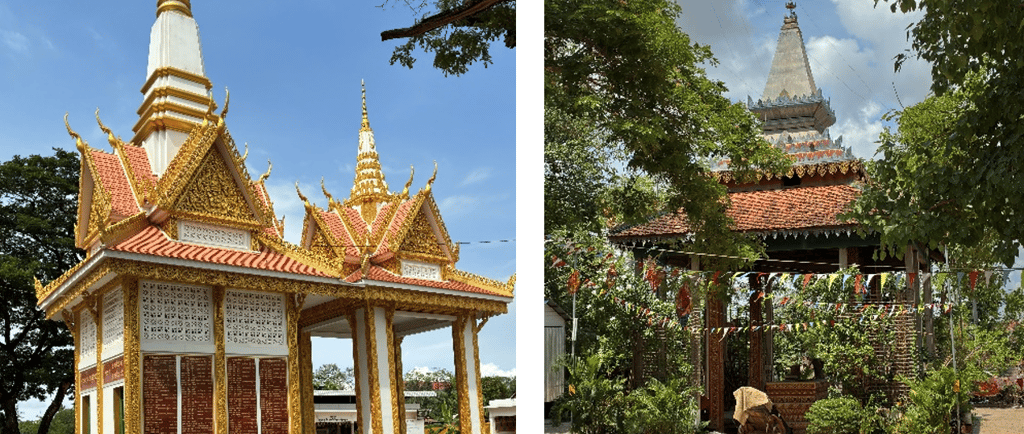
As Buddhist wats face east, one would expect crematoria to be situated west of the temple, towards the setting sun and the axis of Vishnu.
In modern Buddhist wats, however, the crematorium is placed where land is conveniently available. Unlike Western crematoria, they are designed as grand, open pavilions, with all the decorative elements that suggest a passage to the heavens. The coffin is cremated on a tall platform inside the pavilion for all to see.
The new crematorium at Siem Reap’s Wat Svay, top left, is built of concrete with brick infill and concrete decorations highlighted in gold paint; an attached pavilion (mandapa) adds to the grandeur. Within a few months, the tip of the crematorium’s central spire was blackened by smoke from constant use.
About six months after opening, eight small christmas trees with twinkling LED lights were stationed around the structure, and a grand chandelier hung from the mandapa - magical.
By contrast, only a kilometre south, the older crematorium at Koh Nea Reay, top right, is of a more modest scale. In 1993, it was built with just four columns. Later, its original roof of wooden beams covered with clay tiles was badly damaged by white ants. The upper levels were replaced by tin, yet the repair to the spire maintains the graceful ascending curve of the origional.
In 2021, the pavilion was enlarged with an additional twelve columns and used specifically to cremate victims of COVID.
Postscript: I went to a relative's funeral in 2023 in Australia. It was at a crematorium, and the whole affair was is contrast to the open crematorium of the Cambodian Buddhist world; heavy curtains, automatic doors, the coffin on a conveyor. Enclosed. Mechanical. Hidden. Grief was unbearable.