BUDDHA AND THE ESCALATOR
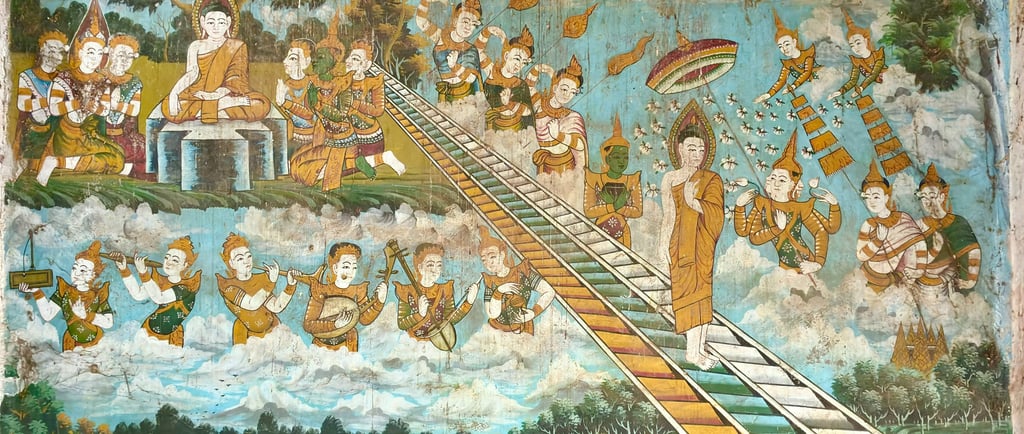
1960s Buddhist murals at Wat Kongmuch, Siem Reap.
2/13/20262 min read
Storytelling through images is a craft that transcends cultures, while the materials and methods used can vary significantly. Consider the refined stone bas-reliefs carved over 800 years ago at the Bayon and Angkor Wat temples, or these dry plaster murals painted at Wat Kong Moch in Siem Reap only sixty years ago. Epic storytelling creates a link, but the later mural artists struggle with a new visual science—the notion of perspective.
First, we must understand the stories in the mural posted above.
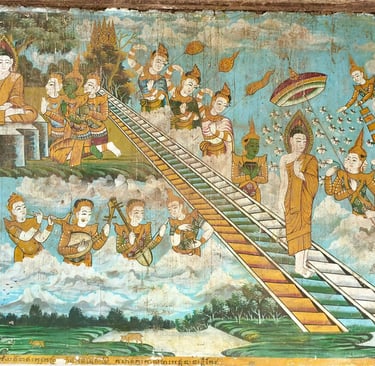
At the top left, at the request of the thirty-three heavenly gods, the Buddha has ascended to heaven to preach to his recently deceased mother. (She is at the centre of the trio to the extreme left, attended by two gods) He sits on a platform beneath a Bodhi tree while the green-skinned Indra, Brahma, and other gods pay respect. As the Buddha completes his sermons, Indra creates a silver, crystal, and gold staircase for the Buddha to return to earth. The Buddha takes the central crystal staircase as celestial musicians playing traditional Cambodian instruments celebrate his return (lower left), while other devas shower him with flowers, cool him with sacred fans, and raise umbrellas in his honour (right).
Now let’s consider the techniques. In the early 1960s, skilled village artists would paint the outlines of figures and objects in fluid black lines of ink on the dry plastered wall. The main actors were painted and their bodies modelled using lighter and darker brushstrokes, giving them roundness as seen in both the Buddhas as well as the costumes of the heavenly gods. Apprentices or children at the wat’s school would fill in the shapes of lesser figures with plain colours as directed by the senior artists. If we look beyond the figures, we can see the very skilled representation of the natural world: open landscapes, forests, hills, and clouds. The modelling of branches in trees is particularly adept.
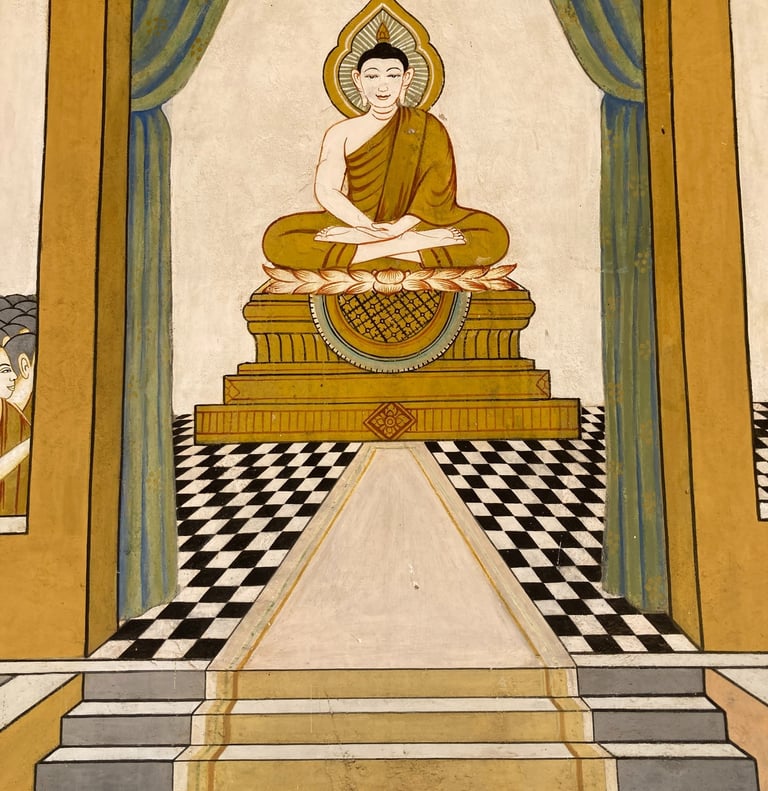
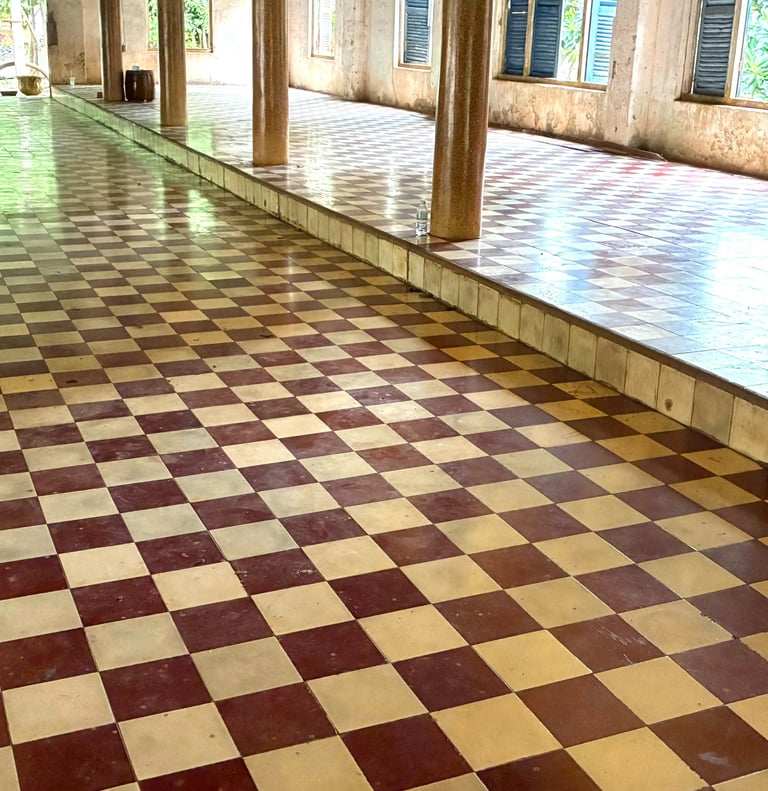
When rendering repeated geometric patterns, such as the dramatic diagonal staircases, the steps appear clumsily painted from a Western point of view. Oddly, the stairs appear to be moving, like an escalator. Perhaps the illusion is enhanced by the Buddha standing still while riding downwards. Patterned floor tiles, common in wats like Wat Svay, left, create a similar optical confusion, as seen in these this image of the Buddha painted at Wat Bakong, right, during the 1940s by SAM Chum and his family and other assistants. They bear comparison to the 1960s Op Art paintings by Bridget Riley (1900–2000) and similar works of art in that style.
Finally, however, this observation begs the question: Does it matter? Does a practicing Cambodian Buddhist who carries the teaching as an innate moral code see these conundrums of perspective as clouding their readings of the murals?